The Bench That Turns a Route into a Meeting Place
A well-placed bench can turn a shared route into a meeting place by making pausing comfortable, visible and easy without blocking movement.
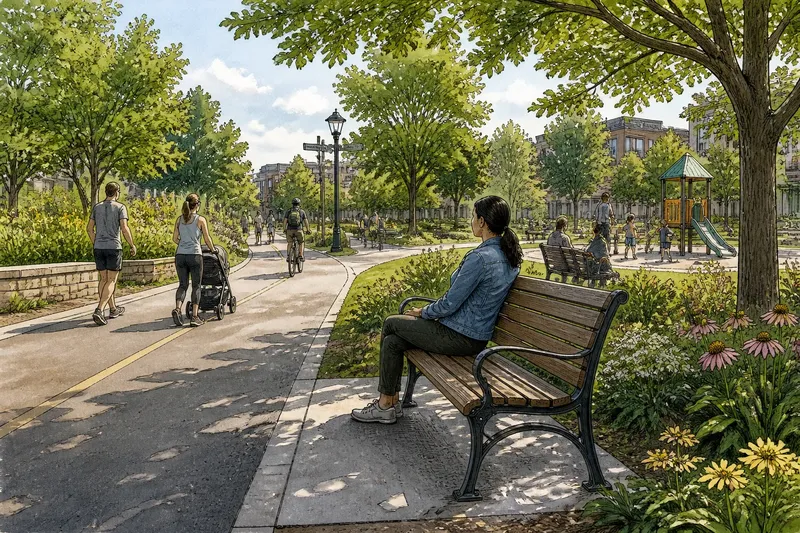
A bench turns a shared route into a meeting place when it gives people a comfortable reason to pause without making others squeeze past. For anyone considering bench placement in a park, plaza or neighborhood path, the key decision is not simply where there is room. It is what kind of pause the setting should support: a quiet rest, a brief greeting or a conversation that can unfold without taking over the route.
Orientation and small comforts help answer that question. A seat facing the path may make passersby feel easy to notice; one angled toward a garden may invite a longer, quieter stay. Neither arrangement is right everywhere. The useful choice depends on who uses the place, what they come there to do, and how people move through it.
Start with the route
Watch the place at different ordinary moments before choosing a spot. Notice where walkers naturally slow down, where someone might need a rest, and where the route narrows or changes direction. A bench should make a pause possible without turning the path itself into an obstacle course.
Look beyond the pavement. A seat near a path junction may serve people deciding which way to go, while one beside a play area can give caregivers a place to sit within view. A bench near a bus stop might be useful for waiting, but only if it does not crowd the boarding area or block people using mobility devices. The setting’s existing uses are clues, not a reason to assume every visitor wants the same thing.
Accessibility and circulation belong in the first decision, not as a later adjustment. Keep a clear route around the seating, consider space for a wheelchair or stroller beside it, and avoid placing a seat where roots, standing water or a steep approach make reaching it difficult. For permanent installation, local accessibility rules and the site owner’s requirements matter; consult the responsible public-space professional when the layout or construction raises questions.
Choose a social distance
Decide whether the bench should support passing contact or face-to-face conversation. A seat set parallel to a busy path lets a person sit beside the flow while remaining available for a nod or greeting. It can suit a narrow greenway or a small pocket park where a group of seats would interfere with movement.
Two benches facing one another create a clearer invitation to talk, but they also ask people to enter a shared social space. That can fit a courtyard or a broad plaza with room to approach from more than one side. On a quieter path, a slight angle between seats can make conversation possible without making every sitter feel watched.
For a place used by people who may arrive alone, a single bench with a little room at one end can be less socially demanding than a tight row of seats. It allows someone to join or leave without asking a group to shift. Avoid treating that arrangement as a universal preference: families, friends and visitors with companions may need room to sit together.
Say a neighborhood green has a narrow path and a sunny patch beside a low planting bed. Imagine placing one bench parallel to the path, leaving a broad approach at its open end and aiming the seat toward the plants. The expected observable result is a place where one person can rest, two people can sit side by side, and walkers still have a clear route past them.
Match comfort to the stay
Small physical details shape whether a bench works for a quick pause or a longer visit. A backrest supports people who want to settle in; armrests can help some visitors sit down and stand up, while also dividing a long seat into smaller spaces. If armrests are used, consider whether there is also a nearby seating option that leaves enough room for people who need to transfer from a mobility device or sit alongside a companion.
Surface material affects the feel of a seat through sun, shade and weather. A metal bench in full sun can become uncomfortable, while a shaded seat may feel cool on a damp day. Wood, metal and recycled-plastic products each have maintenance and comfort tradeoffs. Check manufacturer guidance and the site’s care plan before selecting materials or finishes.
Shade can make a seat usable during a bright afternoon, but a bench tucked deep behind shrubs may feel isolated or be difficult to see from the path. A position near a tree, canopy or building edge can offer shelter while keeping the seat connected to the public life around it. Consider wind, drainage and the route to the seat as part of the same decision.
Small conveniences matter, too. A nearby waste bin can help keep the area tidy, but a bin directly beside the seat may bring noise, odor or frequent servicing. A water fountain or bike rack can serve the wider route, provided it does not crowd the seating area. Choose only the additions that support the intended use; extra fixtures can make a calm place feel cluttered.
Fit the bench to the setting
Different public places call for different kinds of pause. Use the situation, not a generic seating formula, to choose.
- Along a fast-moving path: Choose a position set back from the main line of travel, with the seat facing a view or greenery. This suits a short rest without encouraging a cluster to spill across the route.
- At a path junction: Place a bench where people can see the routes ahead without sitting in the turning space. It works for waiting or orienting, so leave a clear area for people approaching from several directions.
- Beside a play area: Face the activity and keep sightlines open. This suits caregivers who need to watch while sitting; avoid a screen of planting or a seat turned away from the play space.
- In a quiet garden corner: Turn the seat toward plants, water or another calm feature. This fits solitary rest and low-voiced conversation, especially if the approach remains visible and easy to find.
- In a plaza or courtyard: Use a pair of seats or a longer bench near, but not in, the main gathering area. This suits people who want to watch activity or talk, while giving through-traffic and event users room to move.
These choices can overlap. A plaza bench may serve a person alone in the morning and friends later in the day. Aim for flexibility by leaving space beside and around the seat rather than fixing every use through extra furniture or signs.
Questions about bench placement?
Should a bench face the path or the view?
Face it toward the path when brief greetings and awareness of movement matter most. Aim it toward a garden, water feature or open view when the setting is meant to support a quieter pause, while preserving a clear approach.
How far should a bench sit from a walkway?
Keep enough room for people to pass without brushing seated visitors or detouring into planted areas. The exact clearance depends on the route, access needs and local requirements, so use the site’s applicable standards rather than guessing.
Are armrests useful on public benches?
They can make sitting down and standing up easier for some people and can define separate places to sit. They can also restrict how people share a seat, so consider a mix of seating types when the space allows.
What makes a bench feel welcoming at night?
Visibility, a clear approach and lighting that reaches the seating area can help people understand whether it is open and comfortable to use. Avoid hiding the bench behind dense planting, and coordinate any lighting choices with the public-space operator.
Read the place over time
A good bench location should work beyond the moment it is installed. Notice whether people can reach it with ease, whether passersby have room to continue, and whether the seat is used as intended. If it regularly sits empty, the cause could be harsh sun, a blocked view, a noisy fixture or simply a route that offers little reason to stop.
Make small adjustments where they are practical. Trimming back a visual barrier or moving a movable seat can clarify what the place needs; permanent work should be handled by the responsible site manager. Ask people who use the space what makes the seat comfortable or awkward, including those who need a companion space or a clear transfer area.
The bench that turns a route into a meeting place is not necessarily the largest or most elaborate one. It is the seat whose position gives people a choice: pause alone, acknowledge someone passing, or start a conversation without blocking anyone else’s way. When choosing bench placement, preserve that choice and the route around it; both are part of what makes a shared place feel genuinely shared.